
Losing weight does not require giving up your favourite Indian foods or following an extremely restrictive diet. A balanced vegetarian diet that includes vegetables, fruits, whole grains, pulses, dairy products, nuts, and seeds can help you manage your food intake while providing essential nutrients.
This 7-day vegetarian diet plan for weight loss offers practical Indian meal ideas using familiar ingredients such as dal, roti, paneer, curd, chickpeas, oats, and vegetables. The plan focuses on balanced meals, reasonable portions, adequate protein, and sustainable eating habits rather than quick fixes.
Whether you prefer simple homemade meals or want to improve your existing eating routine, you can use this guide to plan your meals for the coming week.
Important: Weight loss depends on your overall energy intake, activity level, health, and individual needs. This meal plan is a general example, not a personalised prescription or a guarantee of a particular amount of weight loss.
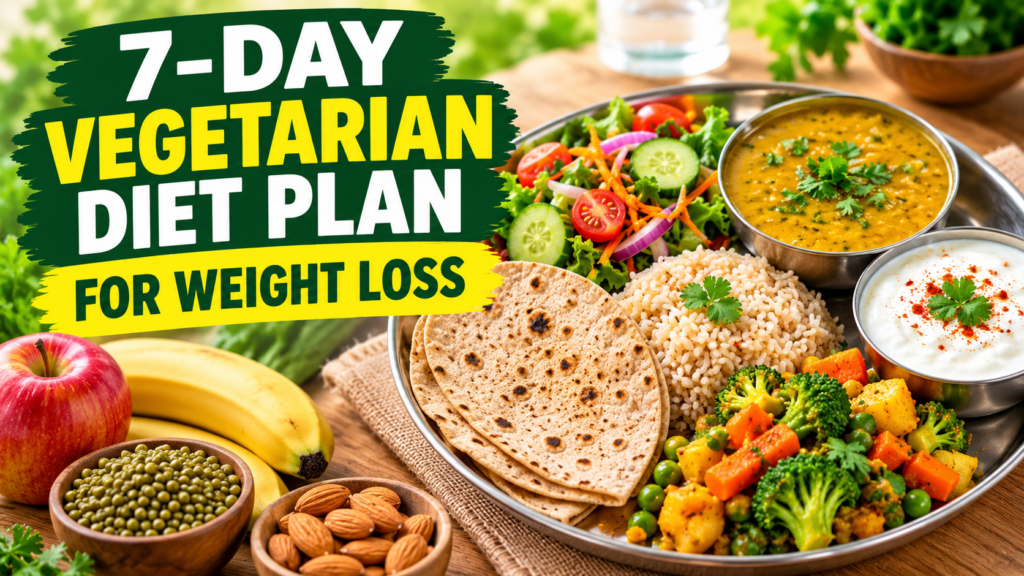
Table of Contents
1. What Is a Vegetarian Diet for Weight Loss?
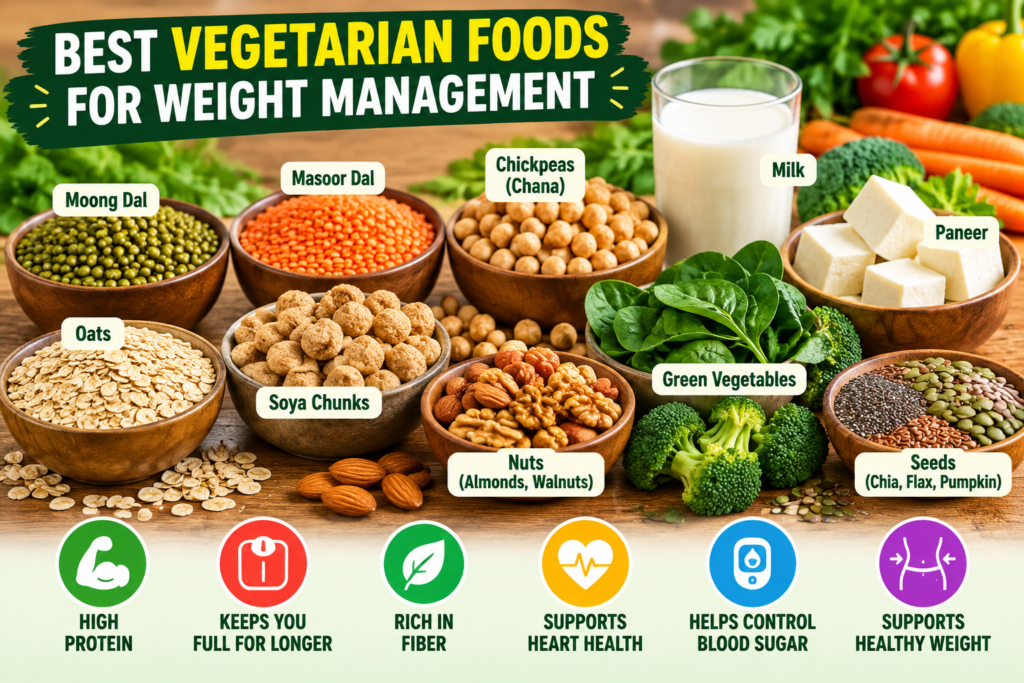
A vegetarian diet excludes meat, poultry, and fish. Depending on individual preferences, it may include milk, curd, paneer, and other dairy products.
For weight management, the goal is not simply to eat less food. It is to choose nutritious foods, manage portions, and develop habits that you can maintain over time.
A balanced vegetarian diet can include:
- Protein-rich foods: Dal, chickpeas, rajma, soybeans, tofu, paneer, milk, and curd.
- Whole grains: Whole-wheat roti, oats, millet, and brown rice.
- Vegetables: Spinach, carrots, cauliflower, beans, cabbage, and other seasonal vegetables.
- Fruits: Apples, oranges, guava, papaya, bananas, and other whole fruits.
- Healthy fat sources: Almonds, walnuts, seeds, and appropriate amounts of cooking oils.
The World Health Organization recommends a varied diet that includes fruits, vegetables, legumes, whole grains, and other nutritious foods. A balanced eating pattern is more important than relying on a single food or eliminating an entire food group without a medical reason. World Health Organization
2. How to Build a Balanced Weight-Loss Meal
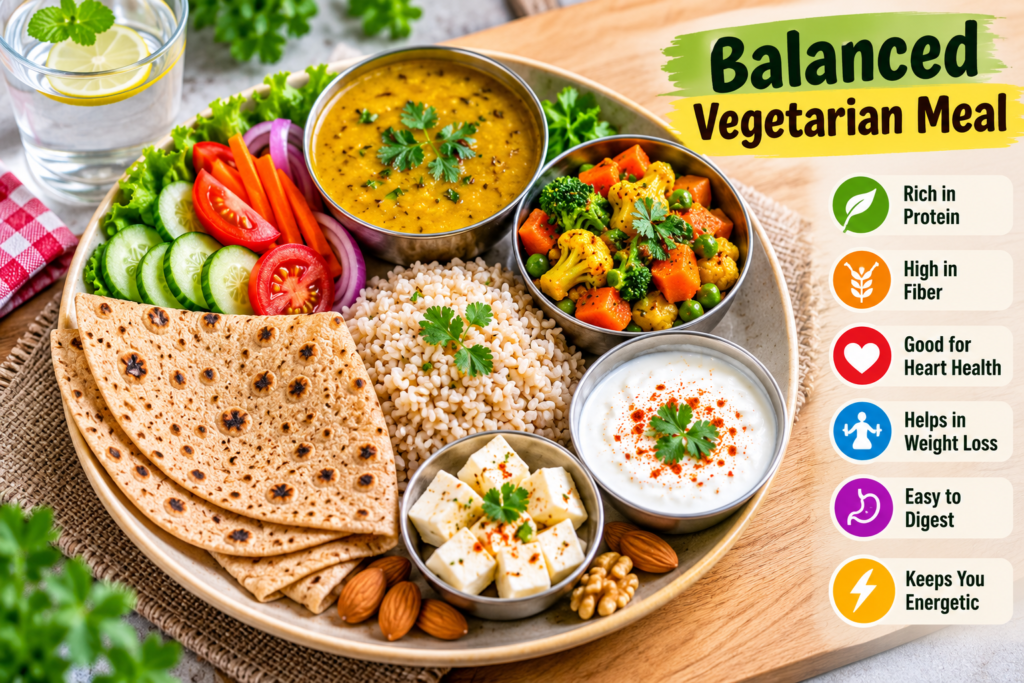
A useful starting point is to build meals around vegetables, protein-rich foods, and appropriate portions of grains.
Include protein in every main meal
Protein supports muscle maintenance and helps make meals satisfying.
Vegetarian protein sources include:
- Moong dal
- Masoor dal
- Chickpeas
- Rajma
- Soy chunks
- Tofu
- Paneer
- Milk and curd
You do not need to eat all these foods every day. Rotate them throughout the week to add variety.
Eat enough vegetables
Vegetables add volume, fibre, vitamins, and minerals to meals. Include a variety of cooked vegetables and salads, while washing raw produce properly.
Choose appropriate carbohydrate portions
Roti, rice, oats, and other grains can all fit into a weight-management diet. You do not need to eliminate carbohydrates.
Instead, consider your portion sizes, preparation methods, activity level, and what you eat alongside them.
Pay attention to cooking methods
Boiled, steamed, grilled, and lightly sautéed foods can make it easier to manage cooking oil.
Deep-fried foods, rich gravies, sugary drinks, and frequent high-calorie snacks can contribute substantial energy without necessarily making meals more nutritious.
3. 7-Day Vegetarian Diet Plan for Weight Loss
The following meal plan uses familiar Indian vegetarian foods and provides several options for each day.
Portion guide: As a starting point, a main meal might include two small whole-wheat rotis or an appropriate serving of cooked rice, one bowl of dal or another protein-rich food, vegetables, and salad or curd as desired.
These are examples, not fixed requirements. Your needs may be higher or lower depending on your body size, activity, appetite, and health.
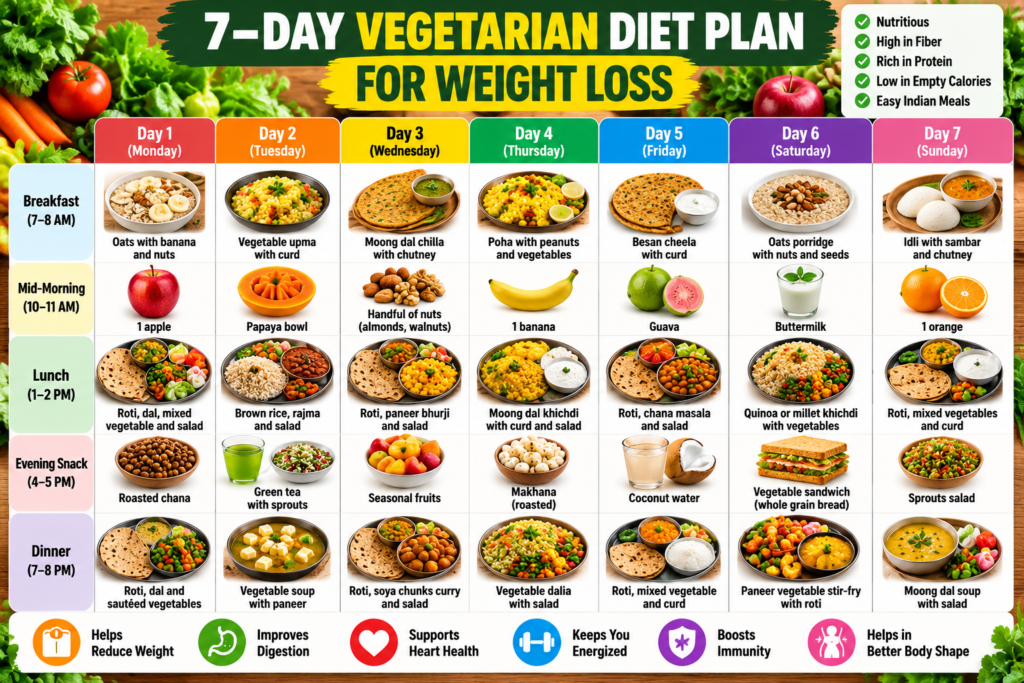
Day 1: Simple and Balanced Meals
Early morning
- Water according to thirst.
- Tea or coffee with little or no added sugar, if desired.
Breakfast
- Vegetable oats cooked with peas, carrots, and beans.
- One small bowl of plain curd, if desired.
Mid-morning snack
- One apple or guava.
Lunch
- Two small whole-wheat rotis.
- One bowl of moong dal.
- One bowl of seasonal vegetable sabzi.
- Cucumber and tomato salad.
Evening snack
- A small handful of roasted chana.
- Unsweetened tea, if desired.
Dinner
- One bowl of vegetable khichdi made with rice and moong dal.
- A serving of plain curd, if desired.
Daily tip: Prepare oats and khichdi with measured amounts of oil rather than adding oil freely.
Day 2: Protein-Rich Vegetarian Meals
Breakfast
- Two moong dal chillas.
- Mint chutney.
- Plain curd, if desired.
Mid-morning snack
- One orange or another seasonal fruit.
Lunch
- Two small rotis.
- One bowl of rajma.
- Cucumber and carrot salad.
Evening snack
- Roasted makhana or roasted chana.
Dinner
- Tofu or paneer bhurji.
- One or two small rotis, depending on your needs.
- One serving of cooked vegetables.
Daily tip: Choose tofu or paneer according to your preferences and nutritional needs. Paneer portions may need particular attention because its energy content can vary with fat content.
Day 3: Fibre-Focused Meals
Breakfast
- Vegetable poha with peas.
- A small serving of plain curd, if desired.
Mid-morning snack
- One bowl of papaya.
Lunch
- Two small rotis.
- One bowl of masoor dal.
- Bhindi or another seasonal vegetable.
- Fresh salad.
Evening snack
- Roasted chana or a small handful of nuts.
Dinner
- Vegetable and chickpea salad with cucumber, tomato, onion, and lemon.
- One or two small rotis, according to appetite and energy needs.
Daily tip: Increase fibre gradually and drink enough fluids to help your digestive system adjust.
Day 4: A Practical Homemade Diet
Breakfast
- Two besan chillas with vegetables.
- Plain curd, if desired.
Mid-morning snack
- One apple or pear.
Lunch
- A serving of cooked rice.
- One bowl of chole.
- A side of cooked vegetables or salad.
Evening snack
- Unsweetened buttermilk or plain curd.
- A small handful of roasted makhana, if hungry.
Dinner
- Two small rotis.
- Soy chunk curry prepared with moderate oil.
- One bowl of seasonal vegetables.
Daily tip: Chickpeas and soy chunks provide plant protein. Including these foods regularly can help diversify your protein sources.
Day 5: Balanced Meals for Busy Days
Breakfast
- Vegetable dalia.
- Milk or plain curd, if desired.
Mid-morning snack
- One seasonal fruit.
Lunch
- Two small rotis.
- One bowl of chana dal.
- Mixed vegetable sabzi.
- Salad.
Evening snack
- Roasted chana.
- Tea or coffee with little or no added sugar.
Dinner
- Paneer or tofu vegetable stir-fry.
- A serving of cooked rice or one or two small rotis, according to your needs.
Daily tip: Prepare dal, chop vegetables, or cook grains in advance when possible. Planning meals can make balanced eating easier during a busy workday.
Day 6: Variety and Portion Awareness
Breakfast
- Vegetable upma.
- A small serving of plain curd, if desired.
Mid-morning snack
- One guava, orange, or another seasonal fruit.
Lunch
- Two small rotis.
- One bowl of rajma or lobia.
- One serving of seasonal vegetables.
- Salad.
Evening snack
- A small handful of nuts or roasted chana.
Dinner
- Moong dal khichdi with vegetables.
- Plain curd, if desired.
Daily tip: You can eat rice and roti in a weight-management diet. Focus on overall portions and balanced meals instead of treating individual foods as forbidden.
Day 7: Flexible and Sustainable Meals
Breakfast
- Two vegetable-stuffed besan chillas or moong dal chillas.
- Plain curd, if desired.
Mid-morning snack
- One serving of whole fruit.
Lunch
- Two small rotis.
- One bowl of dal.
- Paneer or tofu with vegetables.
- Fresh salad.
Evening snack
- Roasted makhana or chana.
- Unsweetened tea, if desired.
Dinner
- Vegetable pulao prepared with a moderate amount of oil.
- A serving of dal or chickpeas.
- Cucumber raita, if desired.
Daily tip: You do not need a completely different menu every day. Repeat affordable meals you enjoy and adjust their portions to suit your needs.
4. Best Vegetarian Foods for Weight Management
Choosing nutritious foods can make your meal plan more satisfying and easier to maintain.
| Food | Main nutritional benefit | Practical way to eat it |
|---|---|---|
| Moong dal | Protein and fibre | Dal, chilla, or khichdi |
| Chickpeas | Protein and fibre | Chole or chickpea salad |
| Rajma | Protein and fibre | Rajma with rice or roti |
| Soy chunks | Concentrated plant protein | Soy curry or vegetable pulao |
| Tofu | Plant protein | Stir-fry or bhurji |
| Paneer | Protein and calcium | Paneer bhurji or curry |
| Plain curd | Protein and calcium | With meals or as a snack |
| Oats | Carbohydrates and fibre | Vegetable oats or porridge |
| Seasonal vegetables | Fibre, vitamins, and minerals | Sabzi, soups, and salads |
| Whole fruits | Fibre, vitamins, and minerals | As snacks or with breakfast |
| Almonds and walnuts | Unsaturated fats and other nutrients | In small portions |
Remember: No individual food burns body fat on its own. The overall eating pattern, portion sizes, activity level, and consistency matter more than any so-called fat-burning ingredient.
For more vegetarian protein ideas, connect this section to your existing article, “15 High-Protein Vegetarian Foods for a Healthy Diet.” Add an internal link to that article using the WordPress editor.
5. Portion Control Tips
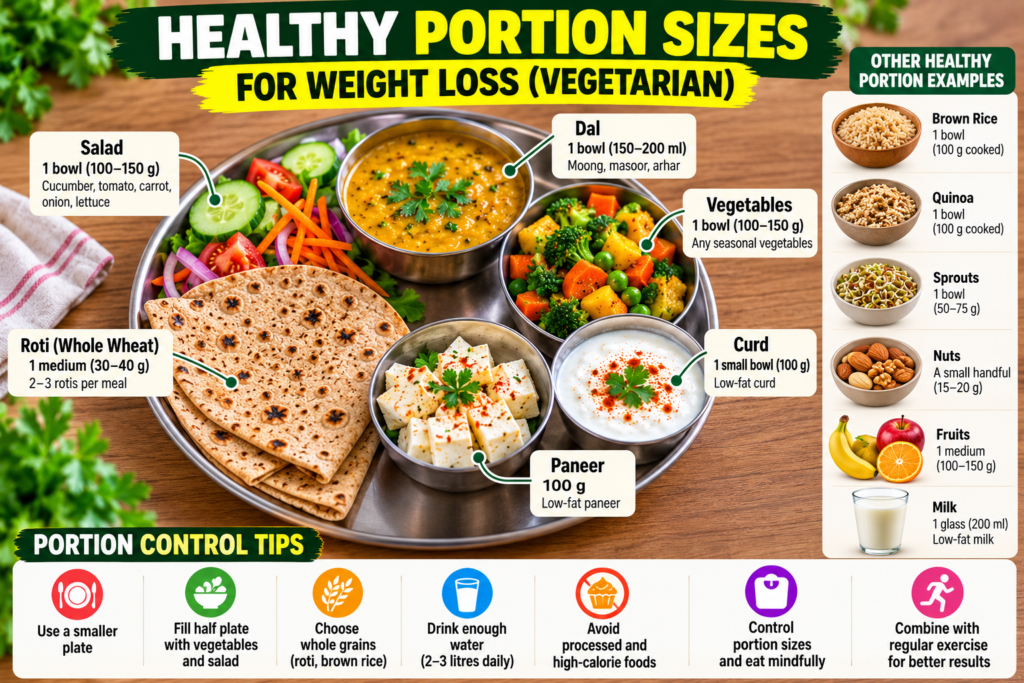
You do not necessarily need to weigh every ingredient or count every calorie to begin eating more mindfully.
Try these practical strategies.
Use a balanced plate
At lunch and dinner, aim to fill roughly half your plate with vegetables, around one-quarter with protein-rich foods, and the remaining quarter with grains or other starchy foods.
This is a flexible visual guide, not a strict prescription. Your actual requirements depend on your health and activity.
Measure cooking oil
Oil contains substantial energy in small quantities. Measure the oil used for cooking rather than pouring it directly from the bottle.
Eat whole fruit instead of frequently drinking juice
Whole fruit generally provides more fibre than fruit juice and can be more filling.
Pay attention to hunger and fullness
Eat slowly and notice when you feel comfortably satisfied. You do not need to force yourself to finish food when you are full.
Avoid unnecessary restriction
Skipping meals or drastically reducing portions can leave you hungry and make your routine difficult to maintain. Choose an approach that provides adequate nutrition and fits your daily schedule.
6. Common Weight-Loss Mistakes to Avoid
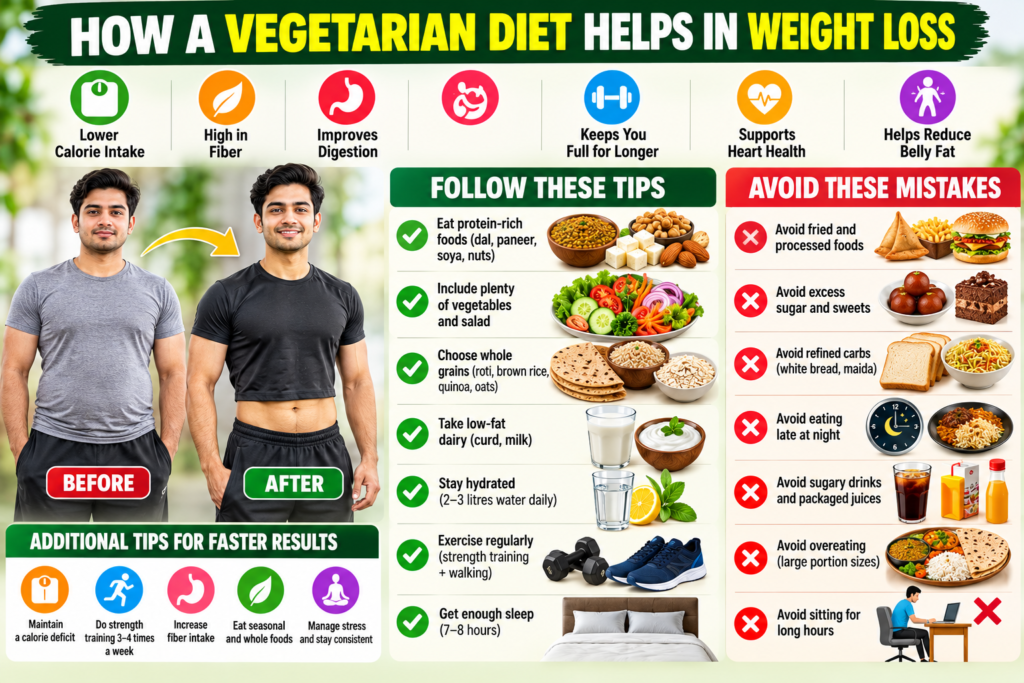
Some common habits can make a healthy eating plan harder to follow.
1. Expecting rapid results
A seven-day meal plan is a starting point, not a promise of rapid weight loss. Body weight can fluctuate because of changes in hydration, digestion, and other factors.
2. Eating too little protein
A vegetarian diet can provide sufficient protein, but meals should include varied sources such as pulses, soy products, dairy foods, and other suitable options.
3. Avoiding all carbohydrates
Whole grains, fruits, and pulses can be part of a balanced diet. Eliminating all carbohydrates is not necessary for weight management.
4. Drinking sugary beverages frequently
Sweetened tea, soft drinks, packaged juices, and other sugary beverages can contribute additional energy. Water and unsweetened drinks are useful alternatives.
5. Treating healthy foods as calorie-free
Nuts, seeds, paneer, cooking oils, and other nutritious foods still contribute energy. Portion sizes remain relevant.
6. Following an unsustainable diet
A plan that leaves you constantly hungry or prevents you from enjoying normal meals may be difficult to maintain. Long-term consistency is more useful than short periods of extreme restriction.
7. Exercise and Lifestyle Tips
Nutrition is only one part of a healthy weight-management routine.
Stay physically active
Walking, cycling, swimming, and other activities you enjoy can help support overall health.
The NHS recommends that adults aim for at least 150 minutes of moderate-intensity physical activity per week, alongside appropriate strengthening activities. Adjust exercise to your fitness level and health. nhs.uk
Include strength training
Strength exercises can help maintain muscle while you work toward your weight-management goals.
Start at an appropriate level and increase the workload gradually.
Get adequate sleep
Regular sleep and wake times can support general health and make daily routines easier to maintain.
Drink water regularly
Drink according to thirst, activity, and environmental conditions. Water is generally a useful everyday beverage, although individual fluid needs vary.
Track progress realistically
If weighing yourself is appropriate for you, look at trends over several weeks rather than interpreting every daily change as fat loss or gain.
You can also monitor energy levels, exercise performance, and how consistently you follow your routine.
8. Frequently Asked Questions
Can I lose weight in seven days with a vegetarian diet?
You may see changes in body weight during the first week, but the amount varies considerably. Some changes may reflect water balance or digestion rather than body-fat loss.
The purpose of this seven-day plan is to help you establish balanced eating habits, not guarantee a particular result.
Can I eat roti and rice while trying to lose weight?
Yes. Roti and rice can both fit into a balanced diet. Pay attention to portion sizes and include vegetables and protein-rich foods alongside them.
You do not need to eliminate these staples simply because you want to manage your weight.
Is paneer good for a vegetarian weight-loss diet?
Paneer provides protein and calcium. Its energy and saturated-fat content vary according to the type and quantity used.
You can include suitable portions as part of a balanced diet. Tofu, dal, chickpeas, and soy chunks provide additional options.
What can I eat when I feel hungry between meals?
Depending on your preferences, try whole fruit, plain curd, roasted chana, or a small portion of nuts.
If you are frequently hungry, review whether your main meals provide enough food and a suitable balance of protein, fibre, and carbohydrates.
Can I follow this diet without going to the gym?
Yes. A balanced eating pattern can support weight management without gym membership. Walking and other forms of physical activity can also contribute to your overall health.
Choose activities suited to your fitness level and any medical limitations.
Is this diet suitable for everyone?
No single meal plan suits everyone. People who are pregnant or breastfeeding, children and teenagers, people with certain medical conditions, and people with a history of eating disorders may need different guidance.
If you have diabetes, kidney disease, or another condition requiring dietary management, consult an appropriately qualified healthcare professional before making significant dietary changes.
9. Conclusion
A balanced vegetarian diet can include familiar foods such as roti, dal, rice, vegetables, fruits, curd, paneer, tofu, and chickpeas.
This 7-day vegetarian diet plan for weight loss provides a practical starting point for organising meals, improving food variety, and paying attention to portions.
You do not need to follow every meal perfectly. Choose foods you enjoy, make adjustments that suit your needs, and develop habits you can sustain beyond the first week.
Start with small, realistic changes and focus on your overall health rather than expecting overnight results.
References
- World Health Organization (WHO). Healthy Diet.
https://www.who.int/news-room/fact-sheets/detail/healthy-diet - NHS. Tips to Help You Lose Weight.
https://www.nhs.uk/live-well/healthy-weight/managing-your-weight/tips-to-help-you-lose-weight/ - Indian Council of Medical Research (ICMR) – National Institute of Nutrition (NIN). Dietary Guidelines for Indians.
https://www.nin.res.in/dietaryguidelines.html
Medical Disclaimer: This article is intended for general educational purposes and is not a substitute for personalised medical or dietary advice. Consult a qualified healthcare professional or registered dietitian for individual dietary recommendations.
Note: For more meal ideas, explore our guide to 15 High-Protein Vegetarian Foods for a Healthy Diet.